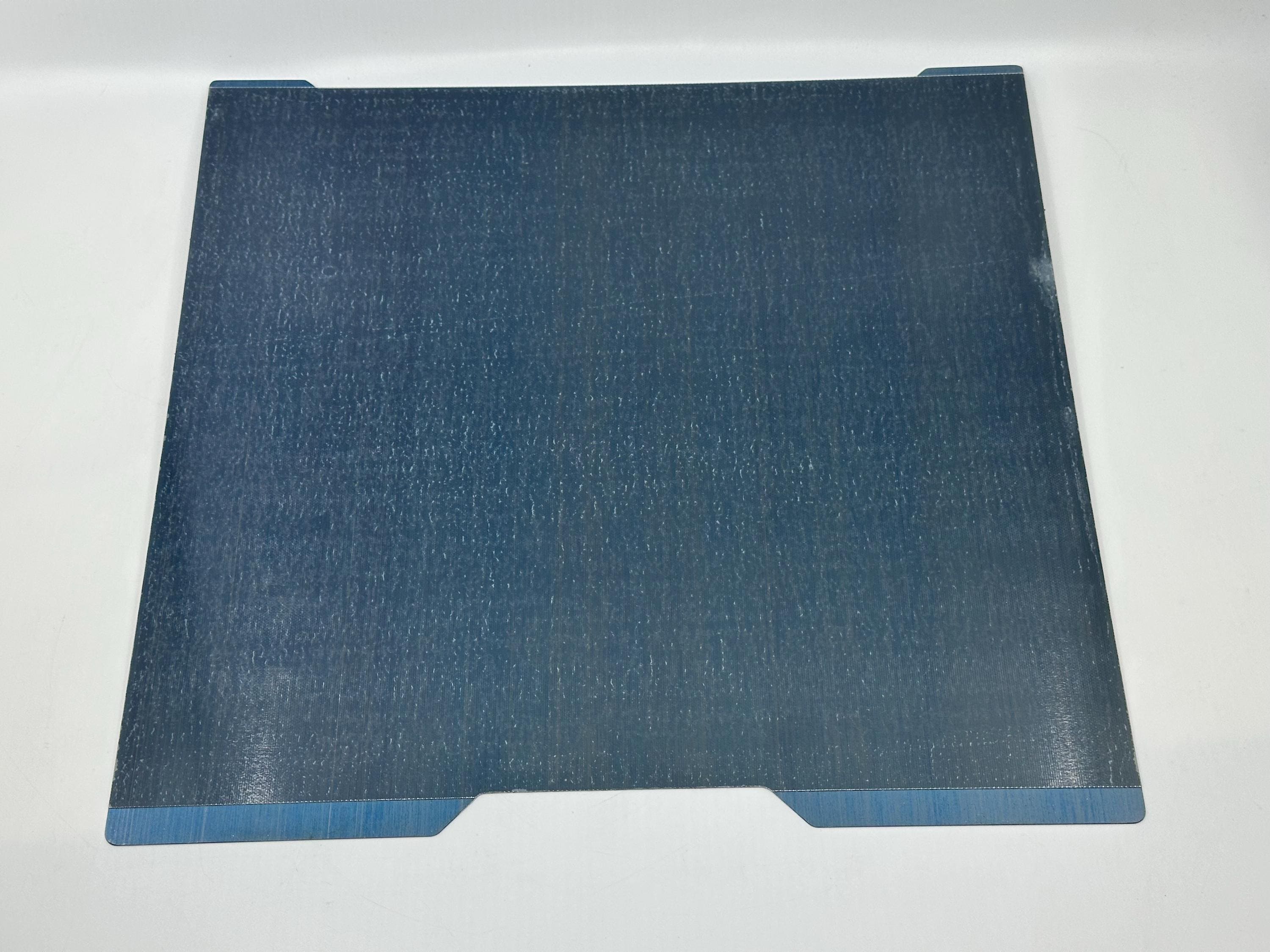
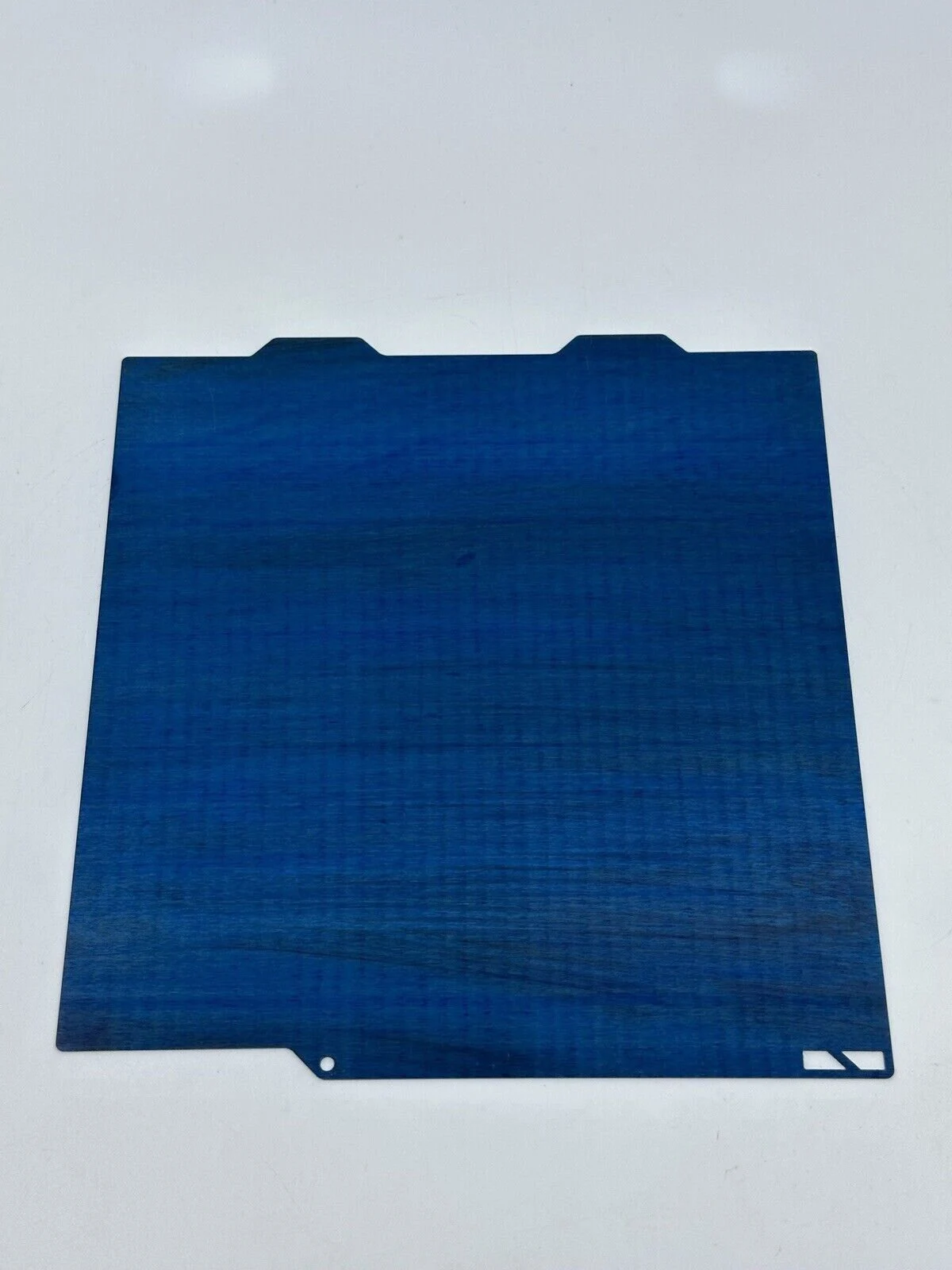
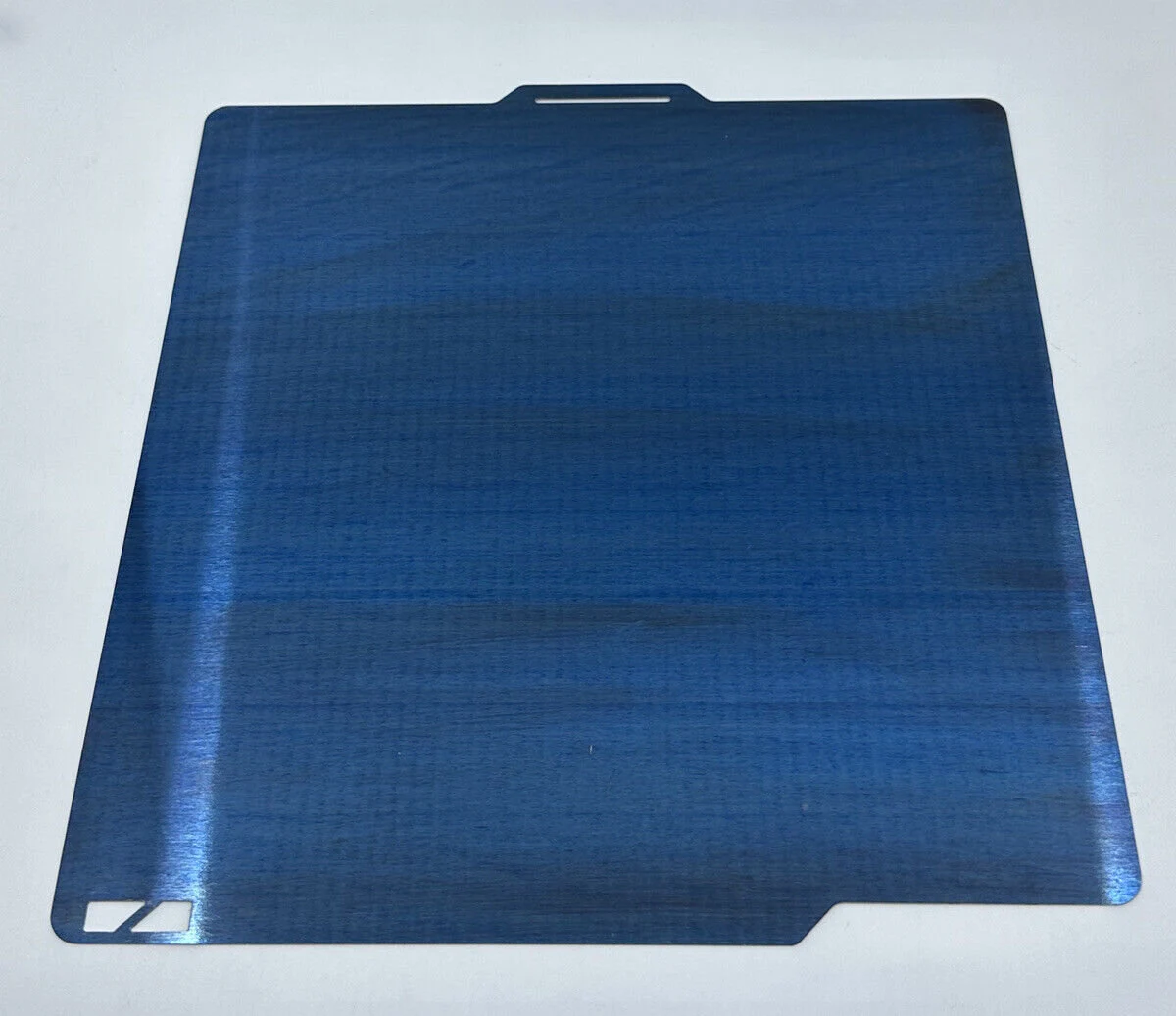
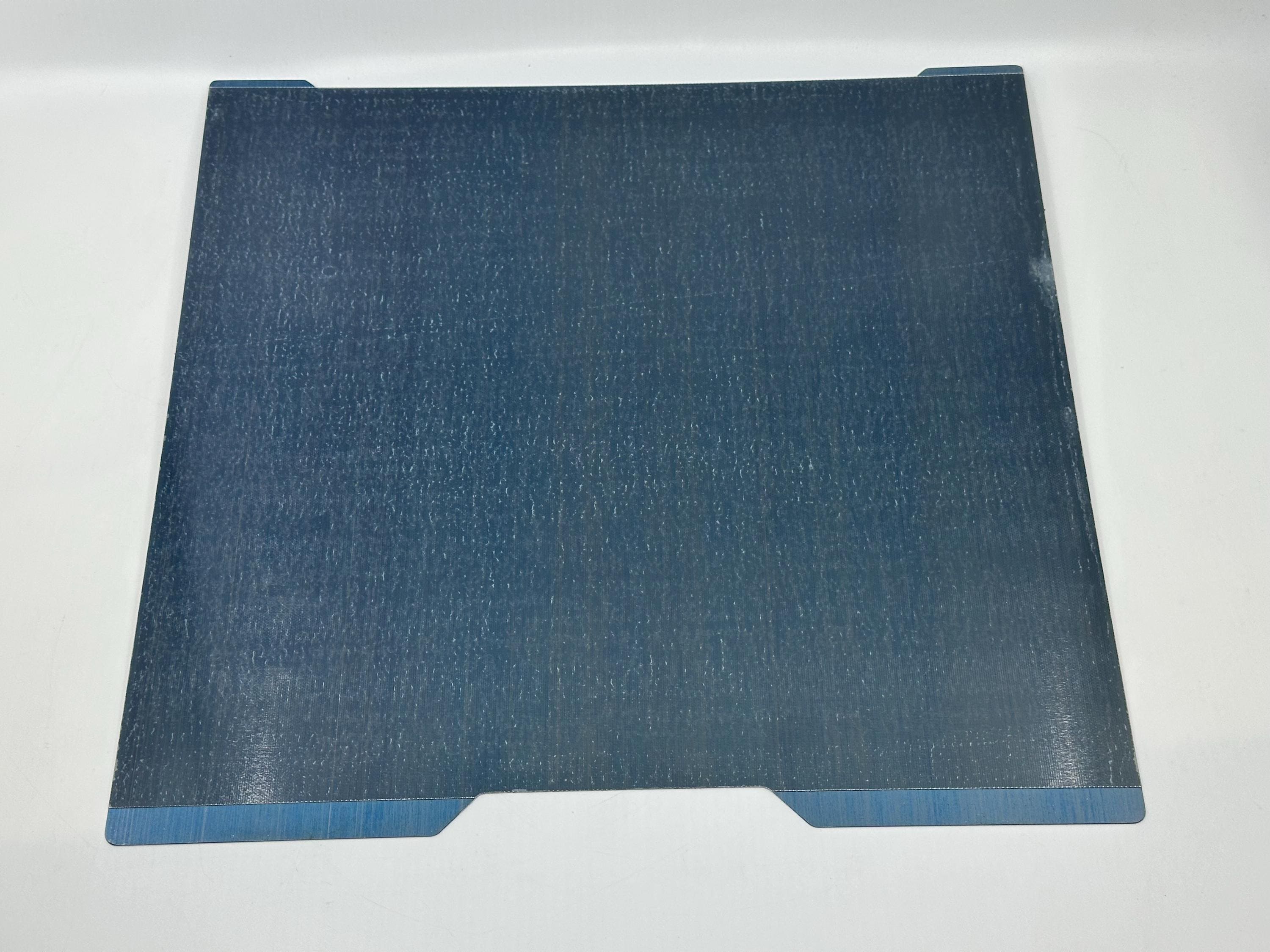
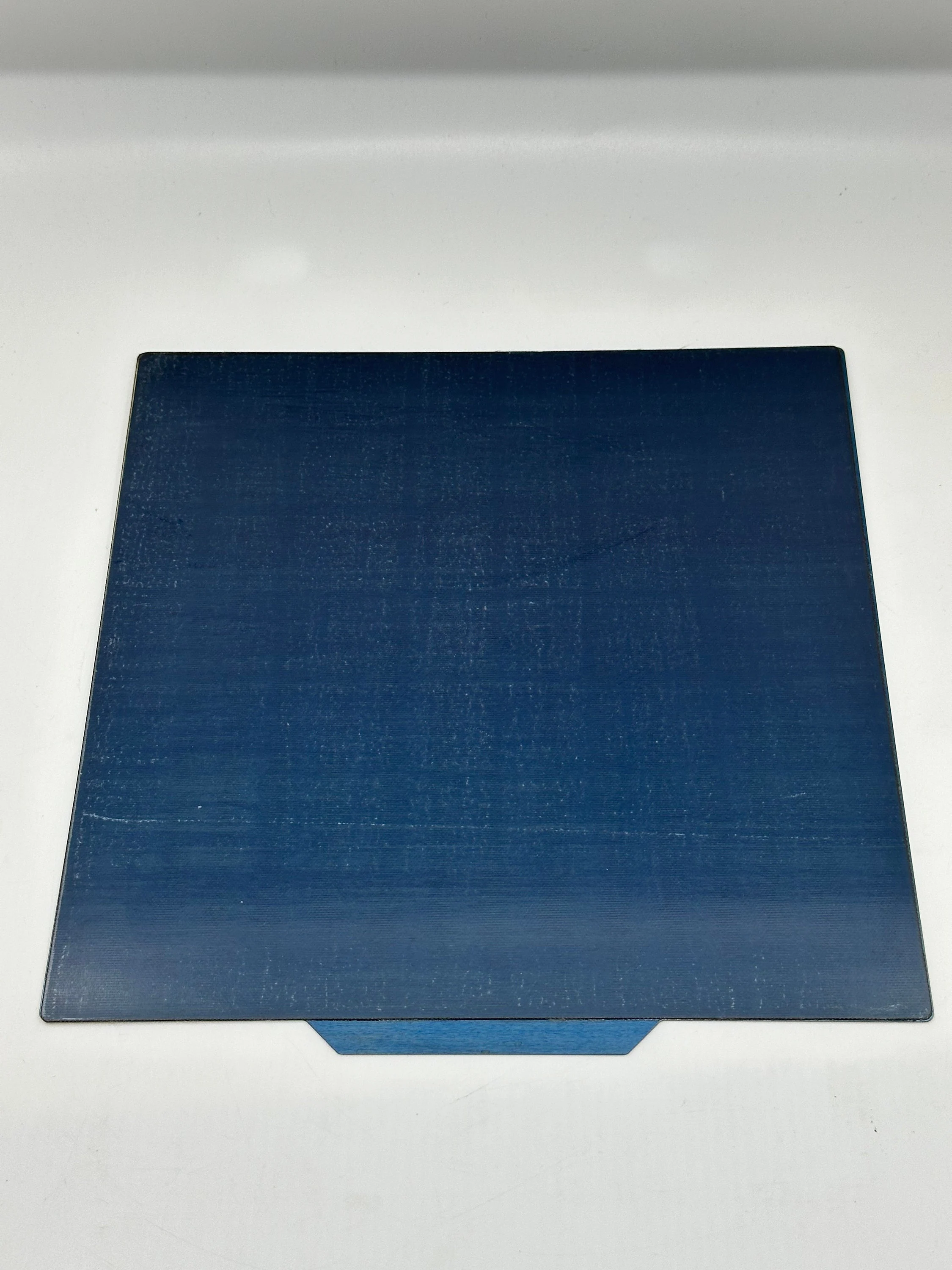
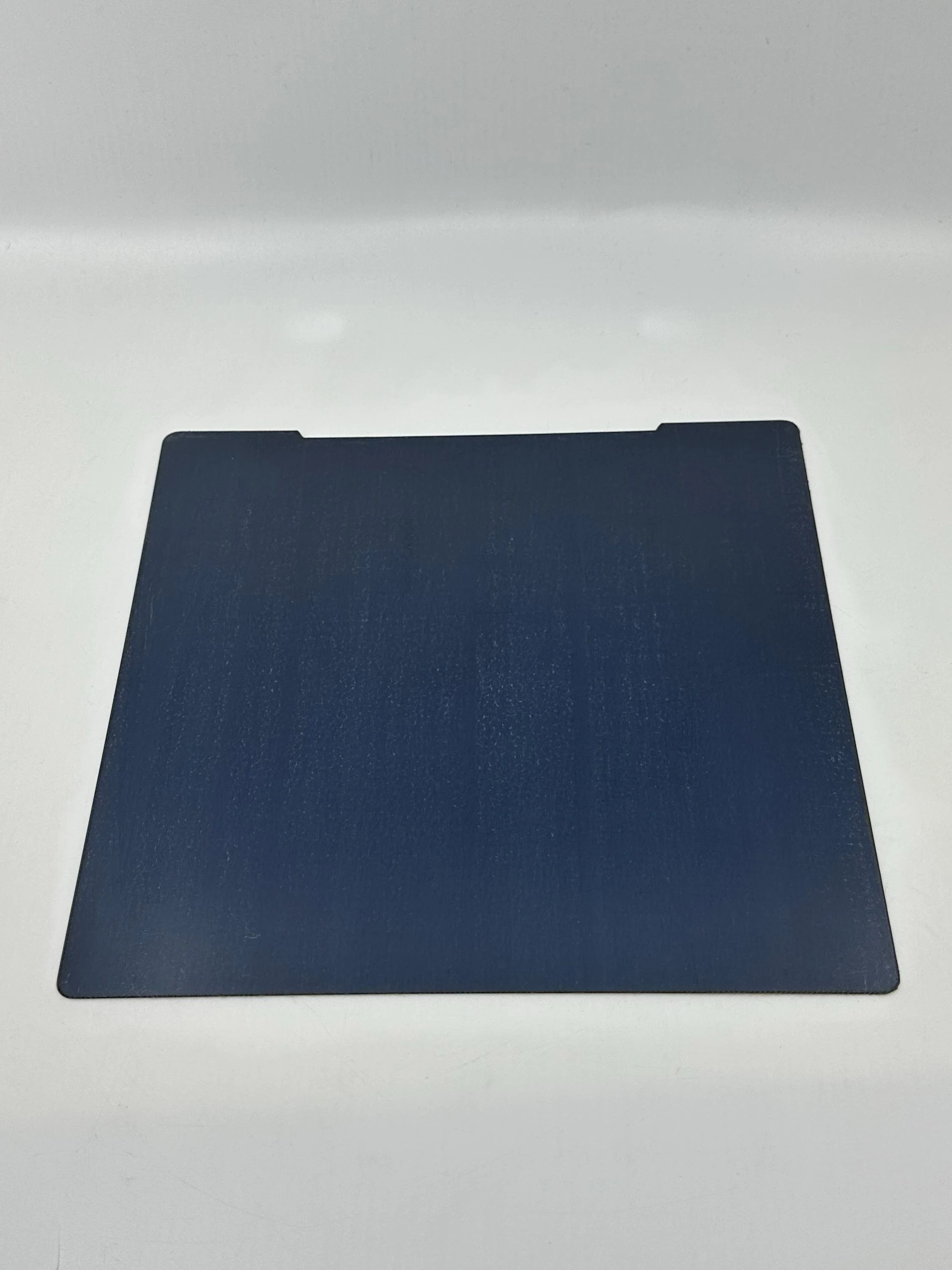
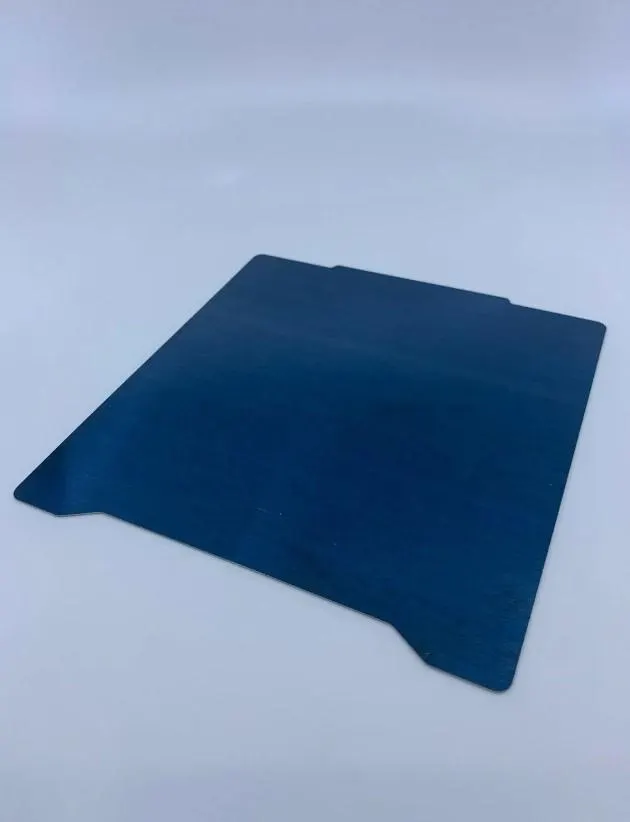
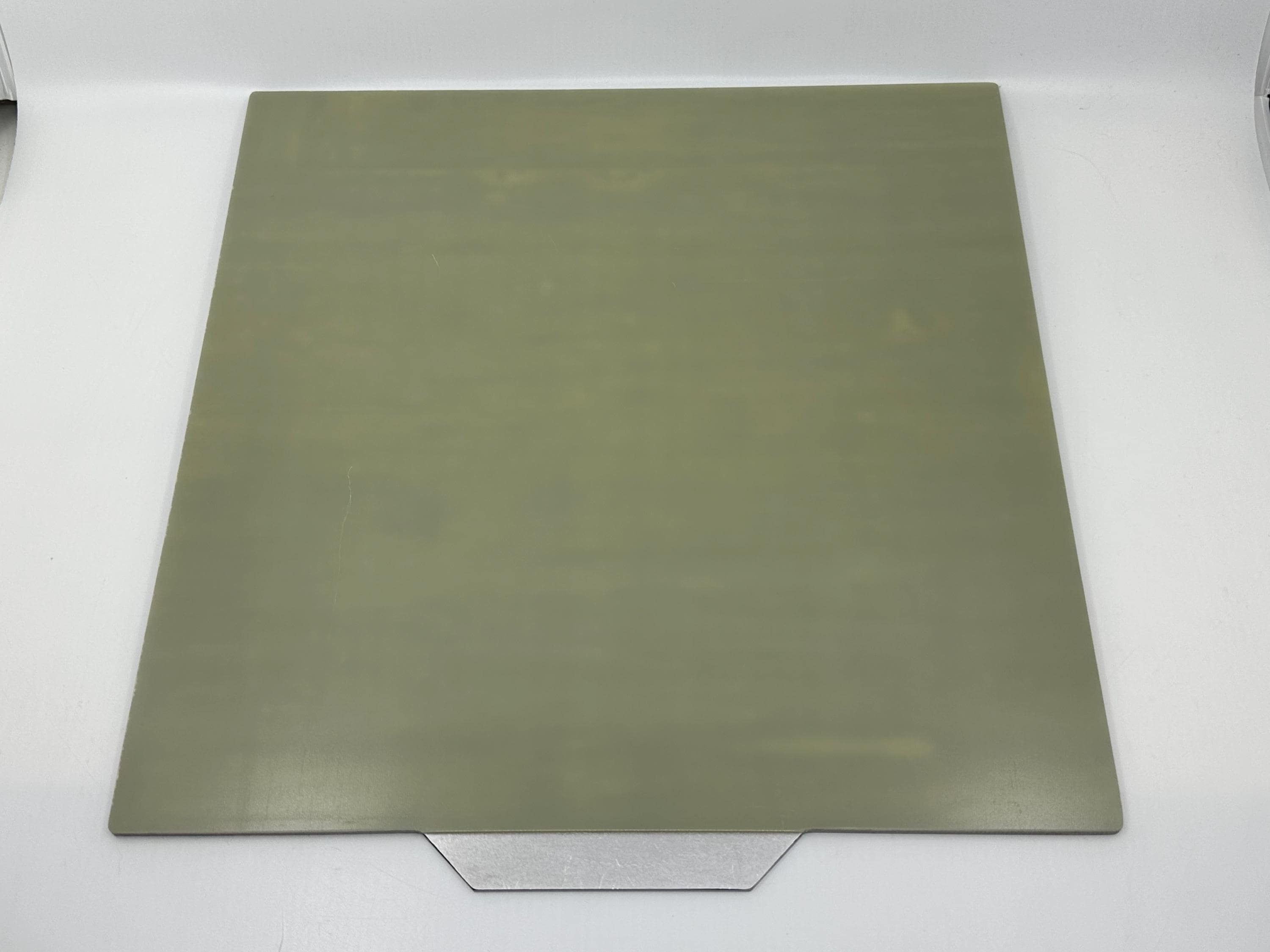
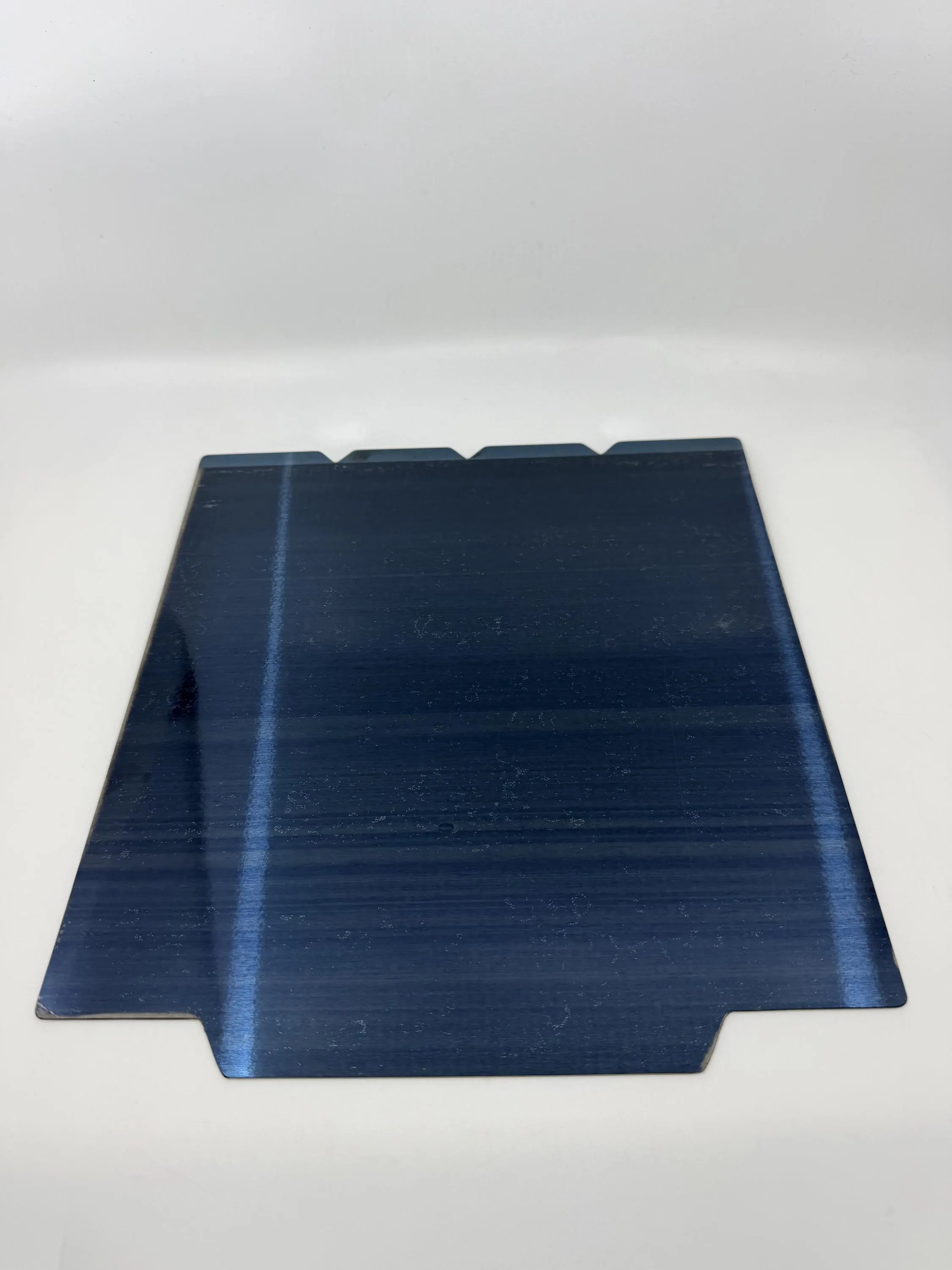
Build plates developed from real production printing experience and built with industrial materials for demanding applications.
Choose your printer manufacturer below to see compatible build plates, available surfaces, and configuration options.
Not Just Another Build Plate
Our build plates were originally developed for our own production 3D printing operation. Printing large quantities of engineering materials taught us that the build surface is only part of the equation.
Plate rigidity, material quality, heat distribution, surface preparation, and the ability to repeatedly release parts all affect how well a build plate performs.
That's why we offer more than the typical coated spring-steel sheet.
Surface Guide
Different filaments behave very differently at the build surface. Rather than trying to make one coating work for everything, we offer several surfaces for different materials and applications.
The compatibility information below comes from our own production use as well as feedback from customers using our plates. Filament formulations vary between manufacturers, so temperatures, adhesives and release behavior may still require some adjustment for a particular material.
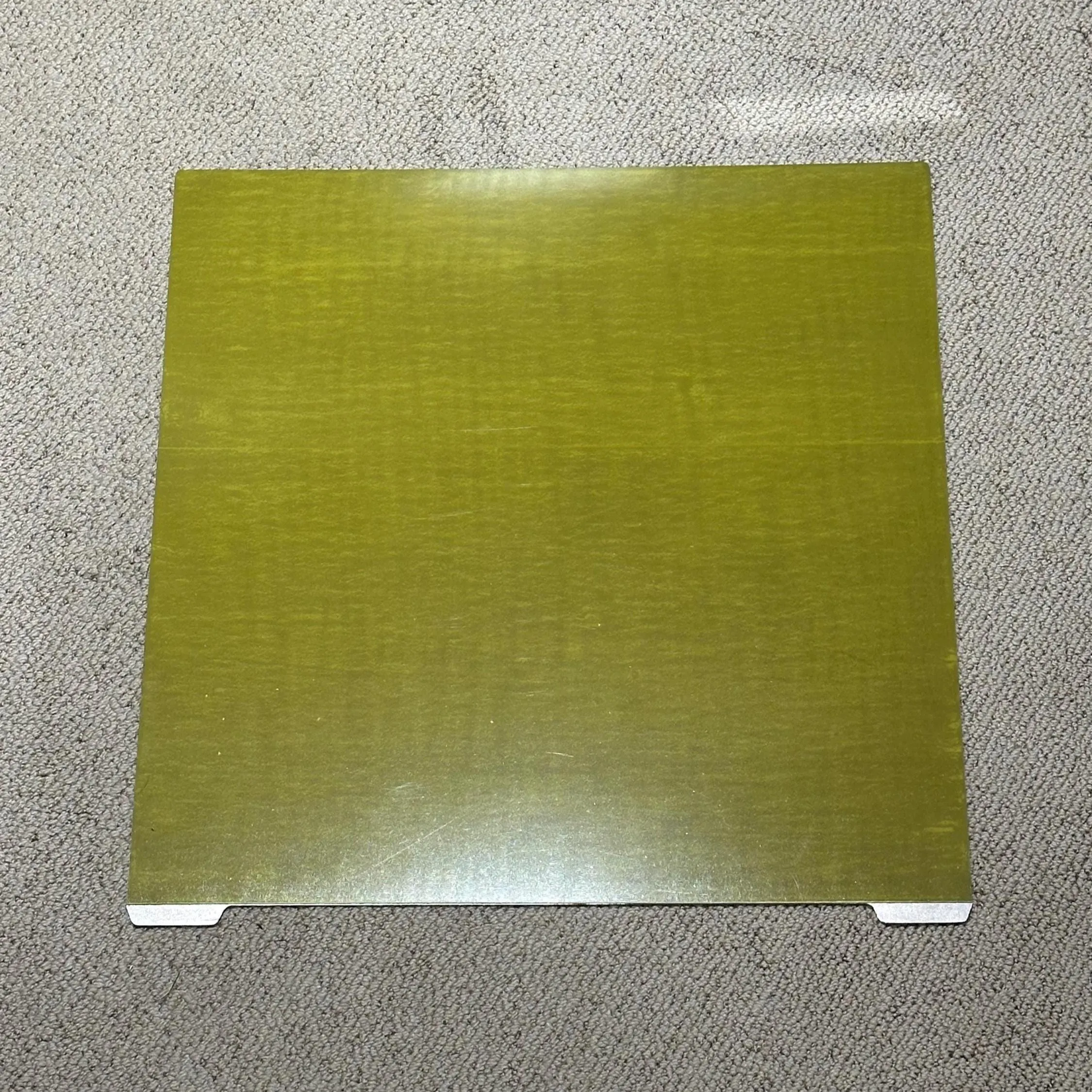
Garolite
Compatible with: Nylon / PA Surface: Tan/brown • 0.8 mm
Our traditional Garolite surface is primarily intended for nylon printing. It provides extremely strong adhesion to nylon and other PA materials.
Because adhesion can be very strong, a release interface such as purple glue stick may be desirable with some nylon formulations. The surface can also be lightly sanded when additional adhesion is needed.
Garolite is an industrial laminate, so minor cosmetic variation, scuffs, pits, or other surface imperfections are normal and generally do not affect printing performance.
Best choice when: Nylon is your primary material and you want a surface dedicated to strong PA adhesion.
Cleaning: Dawn dish soap and water. Rinse thoroughly and dry with a plain white paper towel.
G10
Compatible with: PLA • PETG • PCTG • TPU • Nylon / PA • PC / Polycarbonate • ASA • ABS • POM / Delrin Surface: Clear/translucent • 0.4 mm
G10 is the most versatile of our industrial-laminate surfaces and is an excellent choice when you regularly switch between materials.
PLA, PETG, PCTG and TPU can work directly on G10 without needing to turn the plate into a conventional coated build surface. Nylon and polycarbonate also work well, although particularly demanding parts may benefit from an adhesion or release interface.
ASA and ABS are also good candidates for G10, particularly when paired with a rigid plate for large, high-warp parts.
Vision Miner Nano Polymer Adhesive can be extremely effective with materials such as polycarbonate and can help control warping. With ASA/ABS, however, use it only when additional adhesion is actually necessary—adhesion can become excessive on G10.
POM / Delrin can also be printed on G10. Lightly scuffing the surface with fine sandpaper improves adhesion for POM.
For large parts and high-warp engineering materials, Rigid G10 adds substantial plate stiffness and thermal mass.
Best choice when: You want the broadest material compatibility from a single industrial build surface.
Release: Allow the plate to cool completely before removing strongly adhered parts.
G11 is particularly well suited to nylon and reinforced engineering filaments.
It works extremely well with nylon, including carbon-fiber and glass-fiber reinforced PA materials. PA12 can achieve excellent glue-free adhesion.
G11 is also suitable for TPU.
PVDF: Successful PVDF printing has been reported using G11 with a purple glue stick.
For many printer models, G11 is available on both spring and rigid steel. Spring G11 allows the plate to flex during removal, while Rigid G11 is particularly useful for large or high-warp engineering parts.
Best choice when: Nylon and reinforced nylon are a major part of what you print.
Release: Allow the plate and part to cool completely before removal.
Cleaning: Dawn dish soap and water.
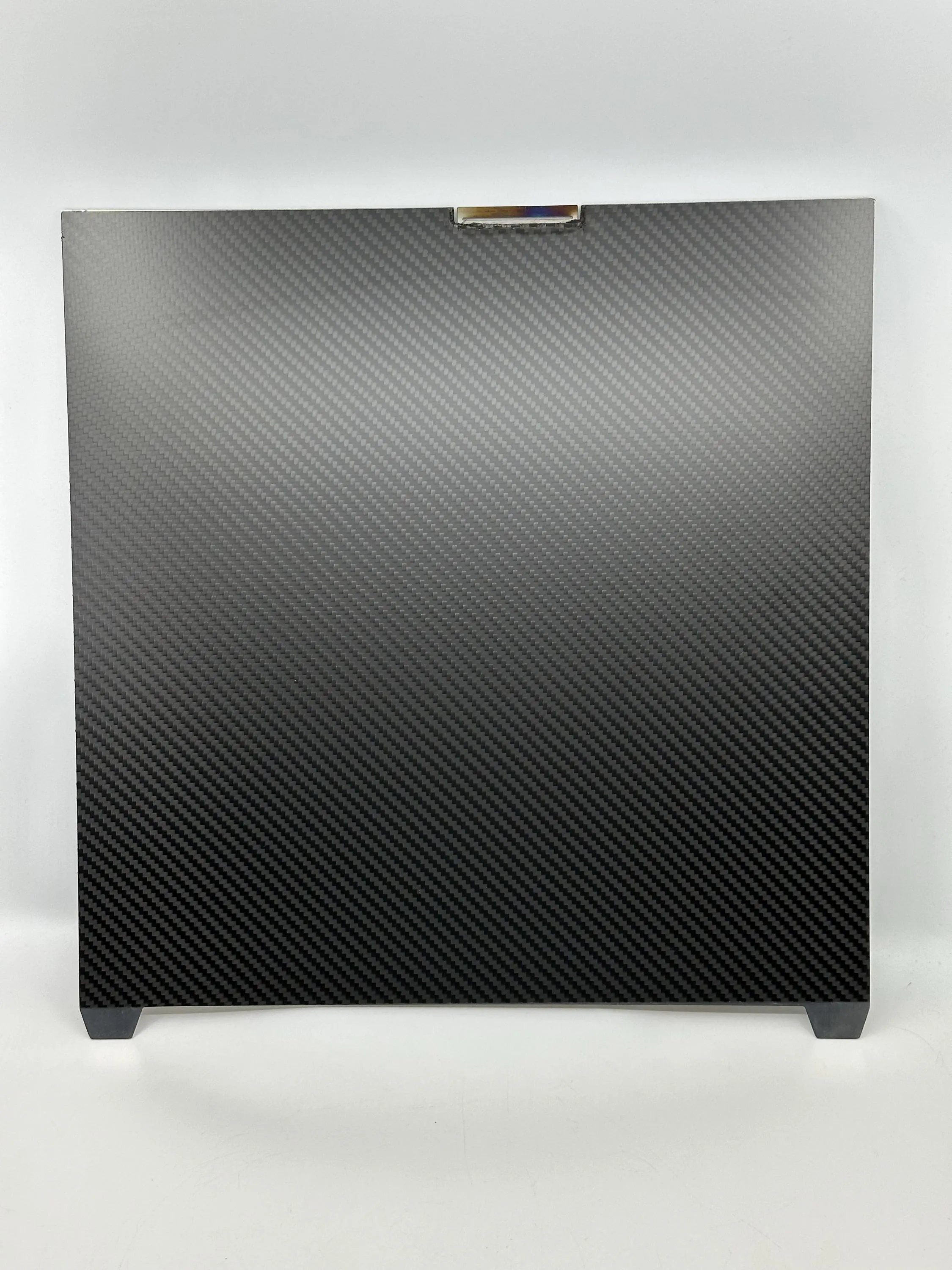
Carbon Fiber
Compatible with: ASA • ABS • PA6-CF • PA12-CF • PC-CF • High-temperature engineering materials including PEEK and ULTEM Surface: Real twill carbon fiber • 0.5 mm
Our Carbon Fiber plate uses real carbon fiber, not a carbon-fiber-effect coating or textured pattern.
The surface is considerably smoother and more cosmetically consistent than industrial G10, which can naturally contain small pits and other surface variation. This makes Carbon Fiber a good choice when you want the performance of a durable engineering build surface with a cleaner, more consistent finish.
One important distinction: this is not a carbon-fiber-effect build plate. The carbon-fiber weave will not be transferred to the bottom of your printed part. Build plates that create a carbon-fiber pattern on the print use a surface texture or effect film to reproduce that appearance; the effect itself is not created by printing against real carbon fiber.
Carbon Fiber is well suited to demanding materials including ASA, ABS, PA6-CF, PA12-CF, PC-CF, and high-temperature engineering materials such as PEEK and ULTEM.
For ASA and ABS, Vision Miner Nano Polymer Adhesive can provide excellent adhesion, with the part releasing cleanly after the plate has fully cooled.
Best choice when: You print demanding or high-temperature engineering materials, need strong warp resistance, or prefer a smoother and more cosmetically consistent surface than industrial G10.
Release: Allow the plate to cool completely before removing the print.
Cleaning: Dawn dish soap and water.
PP
Compatible with: Polypropylene Surface: Frosted/milky translucent • 1.5 mm
Our PP surface provides polypropylene-to-polypropylene adhesion for one of the most difficult common polymers to print.
Always use a release agent when printing PP on a PP surface. Polypropylene can bond extremely aggressively to itself and can effectively weld the printed part to the build surface.
We recommend BuildTak Bond for PP as a release interface. It works well with the heated bed turned off and helps prevent the printed polypropylene from bonding permanently to the PP build surface.
Use Bed Heat With Caution
Unlike G10, G11, or other high-temperature composite build surfaces, the PP surface itself is polypropylene and has a high coefficient of thermal expansion.
For that reason, we generally recommend printing with the heated bed off whenever the application allows it.
As the bed temperature increases, the PP surface expands significantly more than the steel plate underneath it. Excessive heat can cause the PP sheet to grow several millimeters, placing considerable stress on the adhesive bonding it to the steel.
Starting immediately at a conventional high-temperature bed setting such as 100°C is not recommended. At that temperature, the PP surface can expand enough to extend a couple of millimeters beyond the steel plate and can damage the adhesive holding the surface to the steel.
If your particular PP filament or part requires bed heat, start at a low temperature and increase it only as much as necessary to achieve reliable printing. Less heat is better for the long-term stability of the PP surface.
Our preferred starting approach is:
BuildTak Bond for PP as the release interface
Heated bed off
Increase bed temperature gradually only if the particular filament or part requires it
PP has unusually high shrinkage and thermal expansion, so successful printing still requires appropriate part design, printer setup, and process development.
Best choice when: You need a full polypropylene build surface, particularly for larger PP parts where PPMA may not be appropriate.
PPMA
Compatible with: Polypropylene Surface: Very clear, similar to clear packing tape • 0.2 mm
PPMA was developed through our own extensive polypropylene printing. We print large amounts of PP and even extrude our own polypropylene filament. PPMA has become our preferred surface for polypropylene.
PPMA provides strong PP adhesion without glue or a release agent.
Unlike most heated build surfaces, PPMA is intended to print with the bed heat turned off. We typically use approximately room-temperature bed conditions (~20°C), with a first-layer nozzle temperature around 220–230°C. Our typical first layer is 230°C, with subsequent printing generally between 230–270°C depending on the PP formulation.
Part removal: Allow the print to cool, then flex the spring-steel plate deeply in both X and Y directions. Larger parts may require manually pulling the final attached area free.
Aggressive part removal can occasionally introduce air bubbles beneath the PPMA film. Placing the plate PPMA-side down on the printer bed at approximately 70°C for a couple of hours can help work small bubbles out. Large bubbles can be worked out with a soft plastic spatula. Allow the plate to cool completely before printing again.
Cleaning: Remove fingerprints and oils with IPA and a clean paper towel.
Best choice when: Polypropylene is a major part of what you print and you want the PP surface we use for our own production printing.
GeckoTek EZ-Stik Hot
Compatible with: PETG • PP with Magigoo PP Surface: White • Approximately 0.45 mm
GeckoTek EZ-Stik Hot is a commercial polymer build surface that works particularly well with PETG, including difficult prints with relatively small first-layer contact areas.
It is also an excellent option for polypropylene when used with Magigoo PP adhesive. This combination provides strong PP adhesion without printing directly against a polypropylene build surface, eliminating the concern of the printed PP welding directly to a PP plate.
Unlike Garolite, G10, G11, Carbon Fiber, PP, and PPMA, GeckoTek is a third-party manufactured build surface that we apply to our steel plate system.
Like other polymer build surfaces, GeckoTek will eventually wear with use and should be operated within the manufacturer's recommended temperature range.
Best choice when: You print PETG or want an alternative PP setup using Magigoo PP adhesive.
BuildTak
Surface: Fine-textured black • Approximately 0.25 mm
BuildTak is a well-established commercial build surface with a fine-textured finish.
We offer it as another proven option for customers who prefer the familiar adhesion behavior and texture of a traditional BuildTak surface.
Important: Do not clean BuildTak with acetone. Acetone can damage the surface.
Best choice when: You already know and prefer BuildTak or want a traditional textured polymer build surface.
Rigid or Spring Steel?
The build surface is only half of the plate.
Spring Steel — Approximately 0.5 mm
Flexible for easier part removal and similar in concept to a conventional magnetic printer plate.
Rigid Steel — Approximately 2.3 mm
Designed for demanding engineering prints, large parts and high-warp materials.
Printer heatbeds are often hottest toward the center and cooler toward the edges. A thin spring-steel plate tends to follow those temperature differences, while the additional thermal mass of a rigid plate helps absorb and spread heat toward the outer areas of the build surface.
This can provide a more consistent build-surface temperature across the usable area, particularly for large parts extending toward the edges of the bed.
Rigid steel also resists being physically curled away from the magnetic bed by a strongly warping part. This gives it two advantages for demanding materials: greater mechanical rigidity and increased thermal mass.
Because of that additional thermal mass, allow a rigid plate adequate time to heat soak before starting demanding prints.
What Customers Are Saying
These plates have been used by customers printing everything from everyday materials to demanding engineering polymers, including PLA, PETG, ASA, ABS, polycarbonate, nylon, reinforced nylons and other specialty materials.
★★★★★
This thing is SOLID. It's about as well made as possible for its given use case. I gave it a couple light passes with a 160 grit DA to give it some teeth and it sticks like a syrup bottle after my daughter uses it. The lack of flex makes me feel like I'm going to tear the z-stage off of our H2D when I remove the plate from the machine, but in the words of my dear friend Dolph, "If he dies, he dies."
MattOriginally posted on Etsy · Aug 25, 2026
★★★★★
Had some engineering filament I needed to print for an order. This was a godsend. 10 out of 10.
AdminOriginally posted on Etsy · Aug 17, 2026
★★★★★
Bought the G10 plate for my RatRig V-Core 4.1 500. The SV08 Max size is a perfect fit and the rigid steel doesn't taco on big warping ASA prints the way a thin flex plate does.
Holds PLA and ASA beautifully (ASA with NPA, self-releases clean once cool), and the seller communication was fantastic throughout. Highly recommend!!
It'd be worth adding the RatRig V-Core 4 500 as a listed printer option, since it shares this exact plate size and other RatRig owners might be interested.
Many of our surfaces are made from materials originally manufactured for industrial applications rather than specifically for 3D printing.
That means performance comes before cosmetic perfection.
G10, G11, Garolite and other industrial laminates may have light scratches, scuffs, small pits, color variation or other cosmetic characteristics from the material manufacturing process. Steel may also show light marks from material handling and laser cutting.
These cosmetic variations normally have little or no effect on printing performance and generally do not transfer to the bottom of the printed part.
G10 Is a Material — Not Just a Marketing Term
Two build plates described as “G10” can behave differently.
Material grade, laminate thickness, construction, surface condition and the plate underneath it can all affect adhesion and release behavior.
Our G10 build surfaces use actual industrial-grade G10 laminate selected through years of real-world printing experience.
If you've used another build plate marketed as G10, don't assume it will behave exactly like ours.
Cleaning Industrial Laminate Surfaces
For Garolite, G10, G11 and Carbon Fiber, we strongly recommend washing with Dawn dish soap and water, rinsing thoroughly and drying with a plain white kitchen paper towel.
IPA and acetone may be chemically compatible with these industrial laminate surfaces, but they can redistribute or leave behind contamination rather than completely removing it. We have found dish soap and water to be the most reliable cleaning method.
Avoid blue shop towels when possible because they can leave residue behind.
When a Print Really Doesn't Want to Let Go
First, let the plate cool completely to room temperature. A part that still feels firmly attached when the plate is slightly warm may release easily after fully cooling.
For particularly stubborn engineering-material prints, placing the plate and part in a freezer for a couple of hours can help. Some parts may release on their own after cooling.
If the part is still attached, a light tap with a dead-blow hammer or carefully working a spatula under a shorter part can help with removal.
For materials that repeatedly adhere too aggressively, a thin layer of Vision Miner Nano Polymer Adhesive can also provide a useful release interface.
Material Compatibility
Filament formulations vary between manufacturers. Two materials carrying the same general polymer designation can still behave differently because of fillers, pigments, flame retardants and other additives.
The compatibility listings above are based on materials successfully used with these surfaces. Temperatures, enclosure conditions, adhesives and other printing parameters may still need to be adjusted for your particular filament and part geometry.
Made for Production. Available for Your Printer.
These plates grew out of our own production printing needs. We wanted build surfaces that could handle engineering materials, repeated use and demanding parts without treating the build plate as a disposable accessory.
Select your printer manufacturer to see the plate designs and surfaces currently available.
Need Something Different?
Don't see your printer, plate size or preferred surface?
We also manufacture custom build plates and can work from printer information, dimensions, DXF files, STEP files or drawings. Custom surface configurations are also available for many existing printer models.